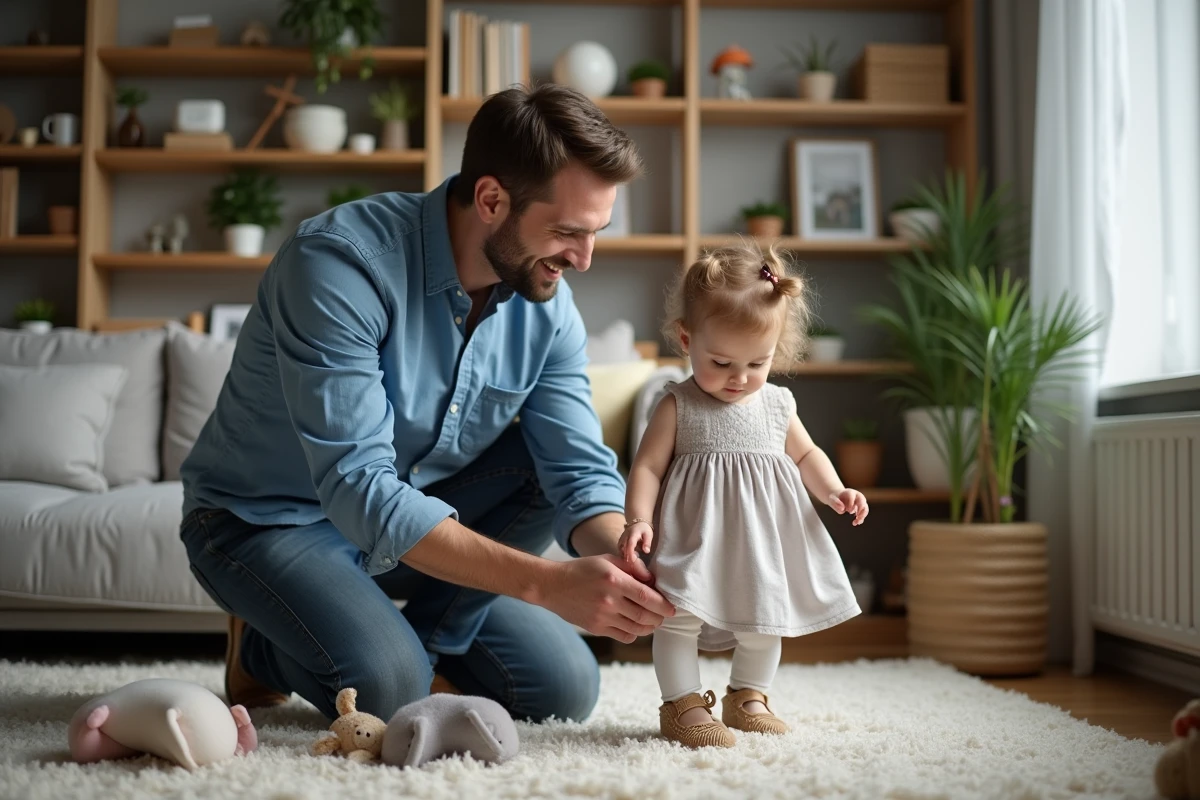
A persistent figure runs through the debates on parenthood: 70% of French fathers feel they lack time with their child during the early years. However, the father’s emotional availability has a lasting influence on the child’s emotional development, according to several longitudinal studies. Most young fathers still underestimate the impact of their daily involvement, convinced that the quality of time spent matters more than the quantity.
The stakes go far beyond the image of the “present” father. Studies confirm it: sharing tasks, daily organization, and the ability to support family logistics strengthen the father-child relationship and solidify the couple’s complicity. There is a growing expectation around the father’s role, yet few know the solutions available to support them on this path. Psychological support systems for new fathers are multiplying but remain underutilized, even though they can give a new impetus to fatherhood.
What no one tells you about the first steps of fatherhood
When fatherhood arrives, it leaves nothing in place: sleep, habits, the spontaneous urge for freedom. This upheaval imposes itself, often contrary to what was imagined: exhaustion, the round of needs, a palette of emotions, from shock to unexpected tenderness. The child demands a stable voice, a reassuring hand, and a presence that knows how to make room for everything, even doubt. And this, too often, remains stuck in the throats of fathers who want to do well without ever showing their flaws.
Daily life calls for anticipation: finding out about paternity leave rights, organizing a realistic sharing of nights, preparing the home, planning the days following the birth. Logistics are never secondary: they shape the atmosphere of the entire household. But in this agitation, the father’s solitude, his desire to do well, and the fear of failing remain too silent. Birth preparation sessions are often experienced as a spectator, yet the stakes are collective. Today, support networks are asserting themselves, and groups are multiplying. For those who want to move forward without a facade, it is possible to consult the site allo-papa.fr to exchange or find concrete answers.
Through experience, a few guidelines emerge:
- Anticipate real needs: sleep, meals, changes. Thinking ahead avoids exhaustion and allows for enjoyment of shared moments.
- Talk with the mother about your emotions, doubts, or fears of the moment. This transparency nurtures mutual trust and reassures the child.
- Admit your hesitations. You don’t become a father in a day; allowing yourself to fumble is part of the learning process.
Paternity leave is not a bonus, but an opportunity to build a bond, not only with the child but also to allow oneself to carve out a place in the family. Do not stifle your impulses or your awkwardness, as this is where authentic memories grow, precious for both you and the child.
How to truly engage daily without losing yourself
Being a dad does not rely solely on physical availability. Rituals, repeated moments, the simplicity of bath time, bedtime, and shared play create a solid foundation of attachment. Nothing requires a complete revolution, but the continuity of small things creates the real presence that matters to the child.
- Welcoming the return from school, even for five minutes, listens and signals that every word from the child has its place.
- Inventing moments together: a board game on Sunday, a bedtime story, a walk home. These habits reassure.
- Delegating when fatigue becomes overwhelming. Leaning on your support network, sharing tasks, not carrying everything alone: this gives you the means to remain available without fading away.
Being present also means knowing how to give yourself breaks. Preserving time for oneself is never superfluous; family harmony depends on it. A calm father inspires security. Adjusting responsibilities with the mother, daring to negotiate, evolving roles, all contribute to a shared balance day after day.
What matters are neither performances nor perfection, but recurring memories. Preparing a cake together, fixing a toy, answering a difficult question, comforting a big sadness, celebrating a good grade: all these moments shape pride, both in the child and the father. This regularity remains, far more than rare extraordinary afternoons.

Resources and tips to navigate the ups and downs with confidence
Moving from joy to fatigue from one day to the next is part of the fatherhood journey. Everyone walks with their uncertainties, bursts of happiness, and fumblings. Strategies for thriving do not impose themselves; they are experienced daily and evolve with the child.
The support of a network remains crucial. Friends, relatives, other parents, or exchange groups can all be valuable: they provide advice for organizing, discussing paternity leave, managing the unexpected, or simply sharing without judgment. Practical resources, books, sheets, or tutorials abound, but it is often the voice of another father that resonates most accurately.
To guide you, keep these concrete tips in mind:
- Listen to both your child’s needs and your own, so you don’t fade behind the role.
- Organize the home, choose a reliable car seat, rethink safety room by room with the arrival of the baby.
- Look after the mother: sometimes, a glass of water offered or taking over a nighttime wake-up says more than grand speeches.
No day resembles the previous one. The shares and tips gathered, the habits built, and the openness to the new form a foundation to lean on even when doubt creeps in. Everyone carves their own path, drawing from what surrounds them, inventing their own way of being a father day by day.
These are the memories that will accumulate in your child’s memory. And it is this unique and precious story that will testify to the strength of an embraced paternal relationship.