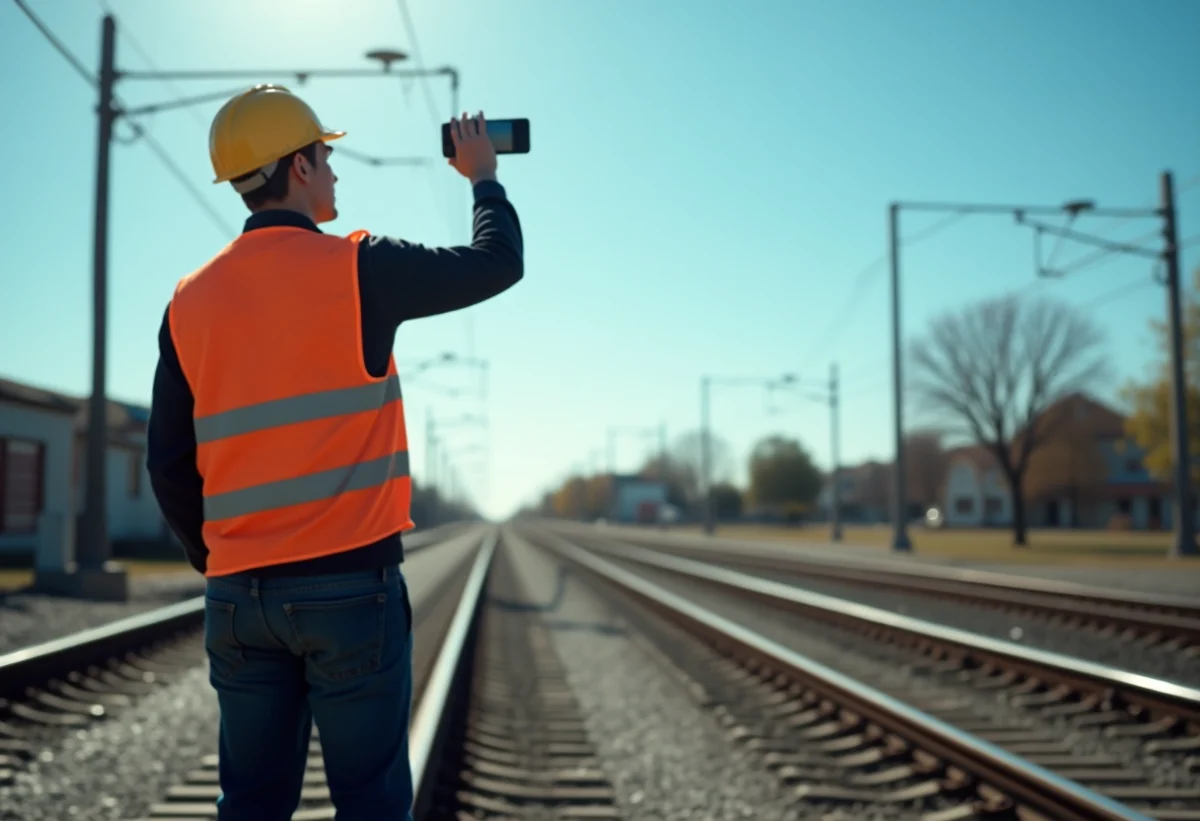
Rail transport plays a fundamental role in daily mobility and the transportation of goods. Behind this well-oiled network lie demanding professions where safety is an absolute priority. Rail professionals, whether train drivers, signalers, or maintenance technicians, strive to follow strict protocols to ensure the safety of passengers and goods.
Every day, dedicated teams inspect the tracks, check signals, and maintain equipment to prevent any failures. Continuous training and emergency situation simulations are also essential to maintain a high level of skill and vigilance.
Rail professions: diversity and importance
The rail sector is distinguished by a great diversity of professions, each playing a key role. Employing around 150,000 people, it continues to grow, with 15,000 trains running every day and a 5.1% increase in the number of passengers in 2019. This expansion requires varied and specialized skills.
Rail signaler, network maintenance technician, ground operations manager: each profession meets specific requirements. The missions range from traffic management to infrastructure maintenance. Training, from vocational certificates to specialized master’s degrees, provides the necessary tools to progress in this demanding sector.
Some specific professions
- Wagonist: specialized in the management and maintenance of railcars, they ensure the safety and proper functioning of trains.
- Overhead line maintainer: responsible for maintaining electrical lines, they ensure the continuity of train power supply.
- Rail traffic planner: optimizes schedules and routes, ensuring smoothness and punctuality.
Initiatives like Futur en Train and Parcours Avenir support the promotion and discovery of these professions. The partnership with Futur en Train aims to raise awareness of lesser-known professions and highlight the required skills. Parcours Avenir supports students throughout their educational journey, facilitating their entry into the rail world.
The rail sector, through the diversity of its professions and the rigor of its training, is a pillar of our modern mobility.
Rail safety: challenges and best practices
Rail safety relies on rigorous practices and strict protocols. Professionals in the sector, such as the rail security officer, network maintenance technician, and track technician, are on the front lines to ensure the safety of installations and passengers.
Major challenges
- Risk prevention: anticipating and identifying potential dangers to avoid accidents.
- Emergency situation management: continuous training to respond effectively in case of an incident.
- Health and safety at work: implementing measures to protect workers’ health, particularly against musculoskeletal disorders.
Best practices
Best practices in rail safety include:
- Compliance with safety rules: each professional must strictly follow established protocols.
- Continuous training: regular training and refresher sessions are essential.
- Safety culture: promoting a safety culture within teams to enhance collective vigilance.
Initiatives such as training for workplace first aiders or implementing programs to prevent musculoskeletal disorders demonstrate the sector’s commitment to safety. The rail sector, through the diversity of its professions and the rigor of its training, is a pillar of our modern mobility.