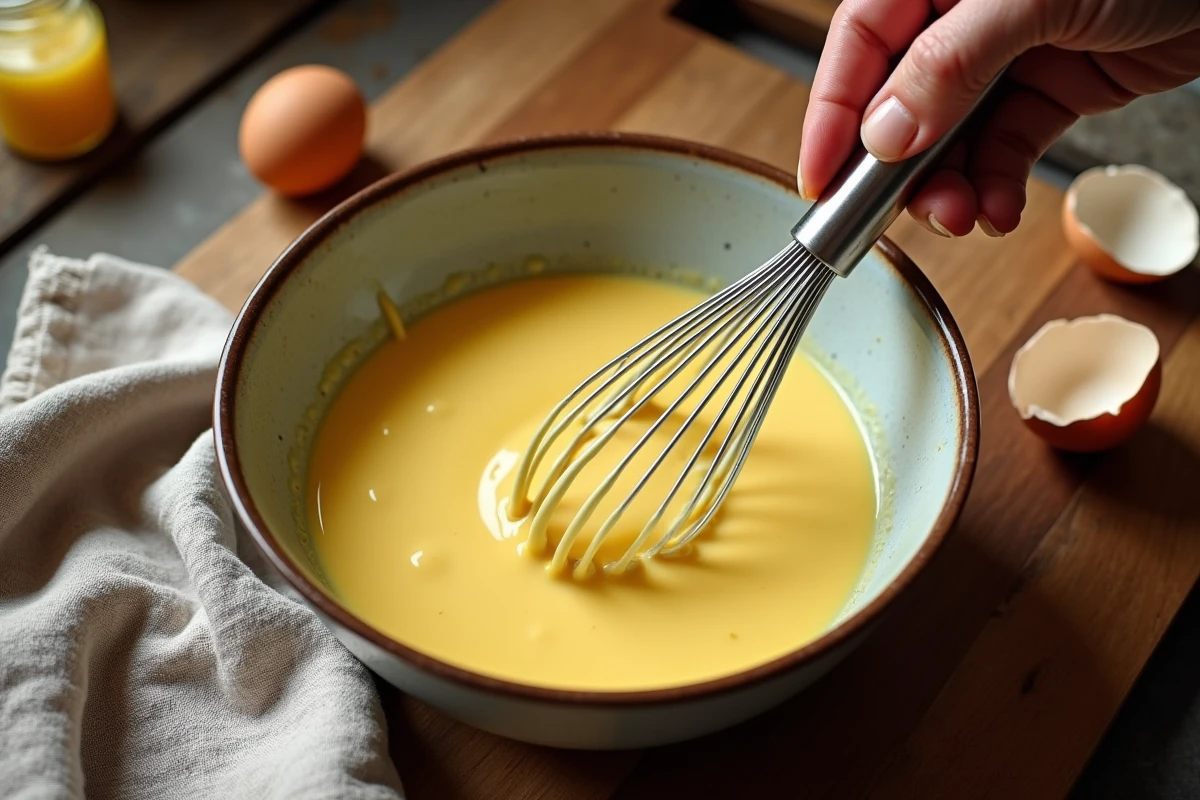
The mayonnaise that refuses to set is rarely a matter of temperature or the speed of incorporating the oil. The problem often comes from the utensil placed on the work surface. Not all whisks create the same shear in the mixture, and this mechanical difference changes everything for achieving a stable emulsion. Choosing the right whisk for mayonnaise requires understanding what is really happening between the wires and the droplets of oil.
Stiff sauce whisk or balloon whisk: the density of the wires changes the texture
Have you ever noticed that a large balloon whisk, perfect for whipping egg whites, produces a somewhat soft and airy mayonnaise? It’s not a coincidence. The shape and spacing of the wires determine the fineness of the oil droplets dispersed in the egg yolk.
A balloon whisk has widely spaced wires and a rounded shape. It incorporates a lot of air with each movement. For egg whites, this is the goal. For an oil-in-water emulsion like mayonnaise, it’s counterproductive. The incorporated air weakens the emulsion at rest and accelerates the separation of the sauce.
The sauce whisk (sometimes called a French whisk) has a narrower silhouette with tightly spaced wires. Each wrist rotation cuts the oil into finer fractions, without trapping air. The result: microscopic droplets better coated by the lecithin in the egg yolk, a firm texture, and prolonged stability in the refrigerator.
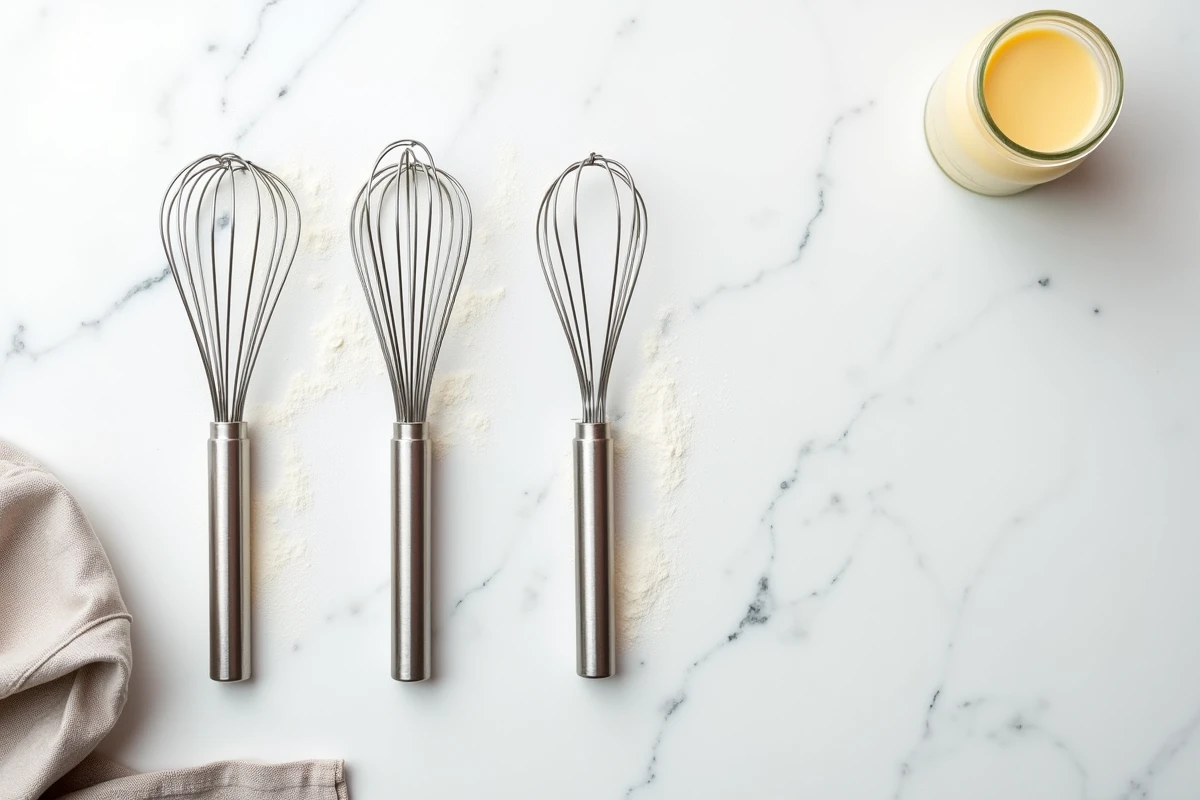
Trainers from the Ferrandi School confirm this logic: a small but tightly wired whisk stabilizes the emulsion better than a pastry whisk. Less air, more shear, less risk of failure. To delve deeper into the subject, check out this guide on which whisk for mayonnaise.
Stainless steel, silicone, or coated wires: which material for making mayonnaise
The material of the wires is not just a question of durability. It directly influences the temperature of the mixture during whisking, a parameter often underestimated in home cooking.
Stainless steel remains the standard in restaurants. Rigid, it transmits mechanical effort well and resists the acidity of vinegar or lemon. Its drawback: it conducts heat. In a stainless steel bowl, a fully stainless whisk gradually warms the egg yolk through friction and conduction. However, an egg yolk that is too warm loses some of its emulsifying power.
Whisks with silicone-coated wires limit this thermal transfer. According to tests reported by the magazine Régal, they maintain a lower temperature during prolonged whisking. Silicone has another advantage: it does not damage the walls of a glass or ceramic bowl.
The trade-off exists. Coated wires are a bit more flexible, which slightly reduces shear. For a classic mayonnaise whipped in two to three minutes, the difference remains minimal. For large quantities whisked for a long time, it can matter.
Criteria for choosing the material based on your use
- Bare stainless steel: maximum shear, ideal for quick mayonnaises in a glass or earthenware bowl (not metal if the kitchen is hot)
- Silicone-coated wires: better thermal control, suitable for metal bowls and long whisking
- Full silicone: flexible and gentle for delicate containers, but too flexible to create sufficient shear on an emulsion – to be avoided for mayonnaise
Hygiene of the whisk and mayonnaise with raw egg: a food safety criterion

Homemade mayonnaise contains raw egg yolk. This detail imposes a particular requirement on the design of the whisk, not just its shape or material.
Most traditional whisks assemble the wires in a ferrule (the metal piece that connects the wires to the handle). This junction area creates a gap where raw egg residues can lodge. A quick rinse is not always sufficient to dislodge them.
Monobloc or encapsulated head whisks eliminate this retention area. HACCP recommendations and Anses guidelines on food contact materials favor these models, as they can be fully washed in the dishwasher without leaving damp corners conducive to the development of Salmonella.
In home cooking, this criterion is often overlooked. If you regularly prepare homemade mayonnaise (or any sauce based on raw egg), checking the design of the ferrule before purchase avoids a real health risk.
Manual whisk or electric mixer for homemade mayonnaise
The electric mixer or immersion blender seems to simplify the task. However, in professional kitchens, there has been a return to the manual whisk for cold emulsions like mayonnaise in recent years.
The reason lies in the speed of rotation. An electric mixer spins quickly, incorporates a lot of air, and heats the mixture. The manual whisk allows precise control of the oil flow and the intensity of the shear, two variables that mayonnaise requires to be mastered simultaneously.
With a mixer, the oil must be poured in a steady stream while the machine is running. The slightest excess destabilizes the emulsion. With a manual whisk, the wrist rhythm naturally adapts to the behavior of the mixture: you speed up when the sauce thickens, you slow down to incorporate the oil.
When the mixer remains relevant
For quantities greater than half a liter, the manual whisk tires the wrist and slows down the process. A variable-speed mixer (set to a low power) then takes over effectively. The idea is not to banish the electric option, but to understand that mayonnaise whips better slowly than at full power.
The ideal whisk for homemade mayonnaise is neither the largest nor the most expensive. It is a model with tightly spaced wires, made of stainless steel or silicone-coated depending on your bowl, with an easy-to-clean ferrule. Three simple characteristics that transform a daily cooking gesture into a reliable result.