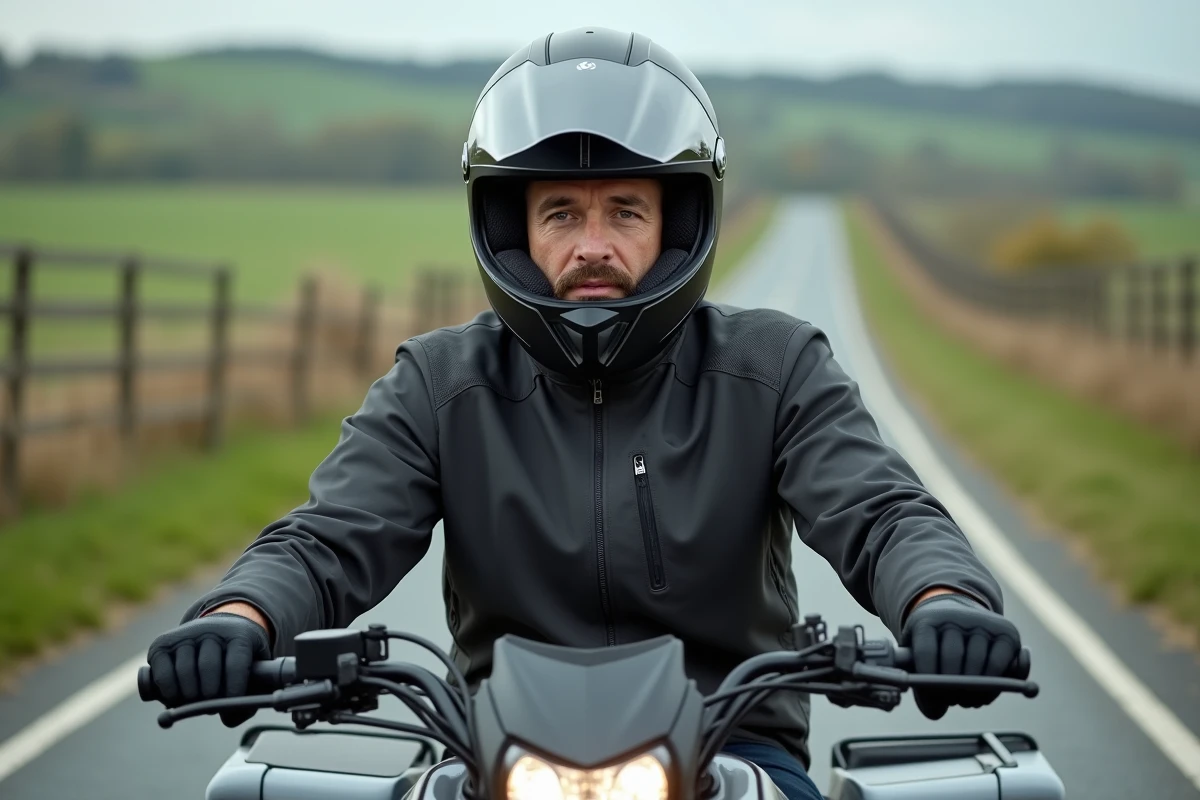
A T3B homologated quad belongs to the category of wheeled agricultural or forestry tractors, sub-category T3b according to European regulation. This classification distinguishes it from heavy quadricycles L7e: the T3B falls under the road code applicable to agricultural machinery, with specific rules regarding licenses, speed, and equipment. Understanding this distinction is the starting point for knowing what the regulations actually allow.
Category T3B: what this tractor homologation entails
The letter T in T3B designates the family of wheeled tractors. The sub-category 3b corresponds to vehicles whose maximum speed by construction does not exceed a limit set by regulation, and whose weight remains contained. Therefore, the T3B quad is not a quadricycle in the sense of L6e or L7e: it is legally a tractor.
This distinction has direct consequences. An L7e quad follows the rules for light vehicles (requirement for a rear differential, Euro 4 standards). A T3B quad follows those for agricultural machinery: mandatory speed limiting disc, illuminated operating or registration plate, rotating beacon recommended depending on the case.
The idea that the T3B would be reserved for farmers persists in many online contents. The ranges marketed in recent years show the opposite. Models like the CFMOTO CFORCE 850 or 1000 and the GOES Terrox are sold in T3B version with a focus on versatility for roads and paths, aimed at both individuals and professionals.
Before detailing the conditions for driving a homologated T3B quad, it should be noted that this homologation opens a broader framework for use than its “tractor” label might suggest.
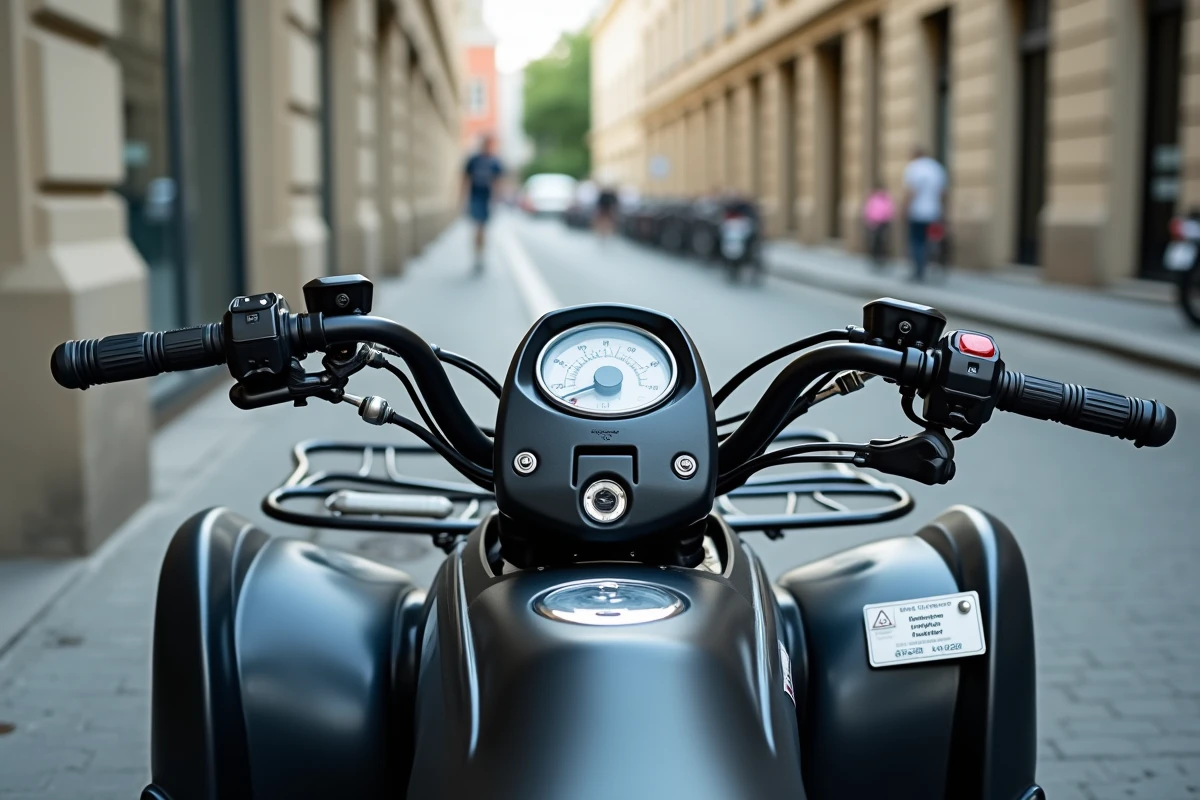
License required for a T3B quad depending on age and status
The required license depends on two parameters: the age of the driver and their possible affiliation with a farming operation.
- From 16 years old, driving a T3B quad is possible if the vehicle is linked to a farming operation, an agricultural work company (ETA), or a cooperative for agricultural machinery use (CUMA). No B license is then required.
- From 18 years old, without any link to a farming operation, the B license is sufficient to drive a homologated T3B quad on public roads.
- The B1 license, available from 16 years old, covers heavy quadricycles L7e but does not apply to vehicles in category T. A holder of only a B1 cannot legally operate a T3B quad.
This distinction between B1 and B is a frequent source of confusion. The B1 targets quadricycles, the B targets light vehicles and also opens access to agricultural tractors. Since the T3B is a tractor, only the B license (or agricultural affiliation for 16-17 year olds) grants the right to drive.
Equipment obligations and speed on open roads
Driving on the road with a T3B quad imposes the same constraints as for any agricultural machinery circulating on public roads. The vehicle must display a visible speed limiting disc at the rear, corresponding to its maximum speed by construction (generally 25 or 40 km/h depending on the approval).
A helmet is recommended by the MSA (Mutualité sociale agricole) but the regulations applicable to tractors do not impose it in the same way as for L7e quadricycles, where wearing an approved helmet is mandatory. In practice, given the exposure of the driver, wearing one remains a basic safety measure.
Regulatory equipment to check on the registration document
The registration document of a T3B quad mentions the number of seats (only one in most cases). Transporting a passenger on a single-seat T3B quad is prohibited. The vehicle must also have at least one brake light, a mileage counter, and a speed indicator.
Insurance is mandatory, as for any motorized land vehicle. A specific “agricultural machinery” or “T3B quad” contract is offered by most specialized insurers. The rates differ significantly from those of an L7e quad, particularly because the maximum speed is lower.
T3B or L7e: what motivates the choice of homologation
The choice between T3B and L7e is not just a matter of licensing. The T3B allows for higher carrying and towing capacities than many L7e quads, which explains its popularity among users who transport equipment or navigate forest paths.
The L7e, on the other hand, is not limited to an agricultural tractor speed. An L7e quad can travel at the permitted speed on the road without specific restrictions related to its category, whereas the T3B remains subject to the limitation indicated on its rear disc.
- Mixed use on roads and paths with payload: the T3B offers more regulatory flexibility for towing and carrying loads.
- Predominantly road use at normal speed: the L7e is better suited, without the constraint of a limiting disc.
- Insurance budget: the T3B is often less expensive to insure due to its reduced speed and tractor classification.
Manufacturers are now positioning the T3B as an alternative to the L7e for drivers who want to leave their homes, use the road network to reach trails, and then return without needing a trailer. This shift in use is visible in recent catalogs, where the T3B is no longer confined to the “agricultural utility” section.

The regulations surrounding the T3B quad remain stable in their fundamentals: B license at 18 years, agricultural affiliation at 16 years, mandatory insurance, speed disc and registration. The point to watch is the possible evolution of emission standards applicable to tractors, which could ultimately modify the ranges available on the French market.