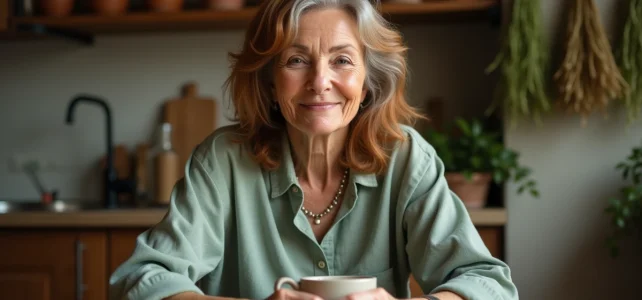
Red hair gets its color from pheomelanin, a red-yellow pigment produced by the melanocytes in the hair follicle. Unlike eumelanin (the brown-black pigment that dominates in the majority of the population), pheomelanin generates shades ranging from intense copper to Venetian blonde. This biochemical peculiarity profoundly alters the way red hair changes appearance over the decades.
Pheomelanin and eumelanin: two pigments, two graying trajectories
All hair color relies on a ratio between pheomelanin and eumelanin. In brunettes and chestnuts, eumelanin overwhelmingly dominates. In redheads, it is pheomelanin that dictates the dominant hue, with a very low proportion of eumelanin.
This distribution has a direct consequence on graying. When melanocytes slow down their pigment production with age, a brown hair loses its eumelanin and turns gray, then white. A red hair follows a different path.
The transition goes through strawberry tones, golden blonde, then cream before reaching white. The classic “salt and pepper” stage hardly exists in redheads because pheomelanin does not produce a gray shade as it degrades.
Understanding red hair in the face of aging therefore requires thinking in terms of pigment chemistry, not simply “loss of color.”

MC1R gene and age of appearance of white hair
Redness is linked to variants of the MC1R gene (melanocortin 1 receptor), located on chromosome 16. This gene codes for a receptor that directs melanin production towards pheomelanin rather than eumelanin. Generally, two mutated copies of the gene are sufficient to produce a complete red phenotype.
Being a carrier of MC1R does not solely determine when white hair appears. Research in hair aging genetics has identified other genes involved in the graying timeline, notably IRF4, Bcl2, and MITF. These genes influence the survival and activity of melanocytes independently of the type of pigment produced.
In practice, two red-haired individuals of the same age can gray at very different rates. Red color does not protect against whitening and does not systematically accelerate it. The timing depends on a set of genetic variants, not just MC1R.
Skin aging and scalp: a vulnerability specific to light phototypes
Redheads most often have a very light phototype (milky skin, freckles, light eyes). This characteristic does not only concern visible skin: the scalp undergoes the same constraints against ultraviolet radiation.
Hospital dermatologists recommend a double prevention strategy for this population covering both the skin and the scalp, starting in childhood:
- Always wearing a hat or head covering during prolonged sun exposure, to protect areas where red hair, often finer, allows more UV rays to filter through
- Applying suitable UV filters on sparse areas of the scalp, especially as hair density decreases with age
- Regular monitoring by a dermatologist of skin lesions on the scalp, an area often neglected during self-examinations
The risk of photo-induced skin cancers (carcinomas, melanomas) is higher in very light phototypes. Accelerated skin and hair aging can result from uncontrolled sun exposure over the long term, making prevention even more relevant for redheads.
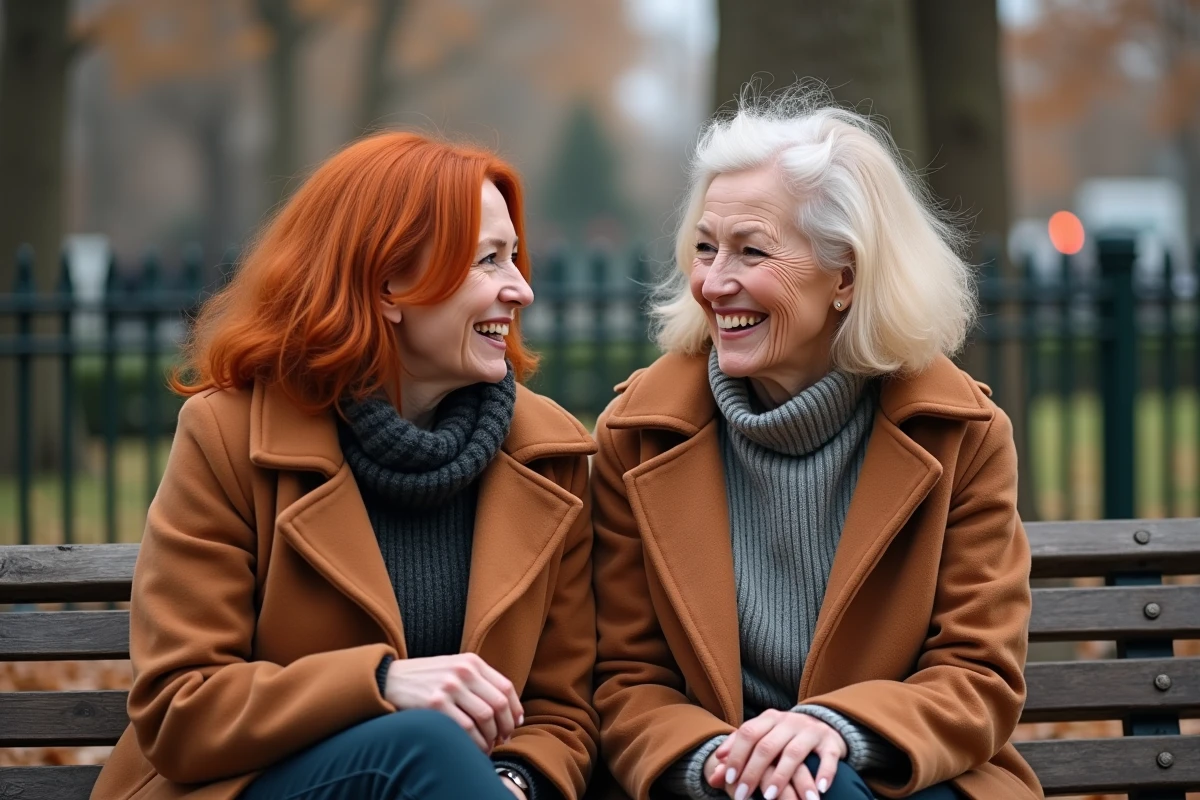
Texture and density of red hair over the decades
Pheomelanin not only influences color. Red hair has distinct structural characteristics. Each strand is on average thicker than that of brown or blonde hair, but the total number of hairs on the scalp tends to be lower.
With age, this combination evolves noticeably. The gradual decrease in the diameter of each hair, common to all hair types, is more noticeable when the starting density is already moderate. Redheads who lose thickness perceive a change in overall volume earlier.
The texture itself changes. Red hair, often slightly wavy to curly, can become drier and more brittle as the scalp’s sebum production decreases. Caring for aging red hair requires increased hydration to compensate for this loss of natural flexibility.
Coloring and caring for graying red hair
Artificially reproducing the red hue remains a technical challenge in hair coloring. Pheomelanin produces a spectrum of shades (copper, auburn, Venetian red) that is difficult to imitate with synthetic pigments, especially on hair that has turned white or cream.
Classic coloring products deposit artificial eumelanin, which is suitable for brunettes but often results in overly uniform or orange outcomes on a graying red base. Here are some guidelines to adapt care:
- Favor sulfate-free products to preserve residual natural pigments as long as possible
- Opt for semi-permanent colors that respect the golden hue rather than aiming for an artificially saturated copper
- Protect the hair fiber from UV rays with specific treatments, as sun-bleached red hair turns straw blonde instead of retaining its warm reflection
Some redheads choose to embrace natural whitening rather than hide it. The transition to white, visually softer than in brunettes, produces rosy or champagne tones that age gracefully.
The hair journey of redheads is marked at every stage by the unique chemistry of pheomelanin. From graying without a gray phase to the solar vulnerability of the scalp, every aspect of aging red hair calls for responses tailored to this particular biology.