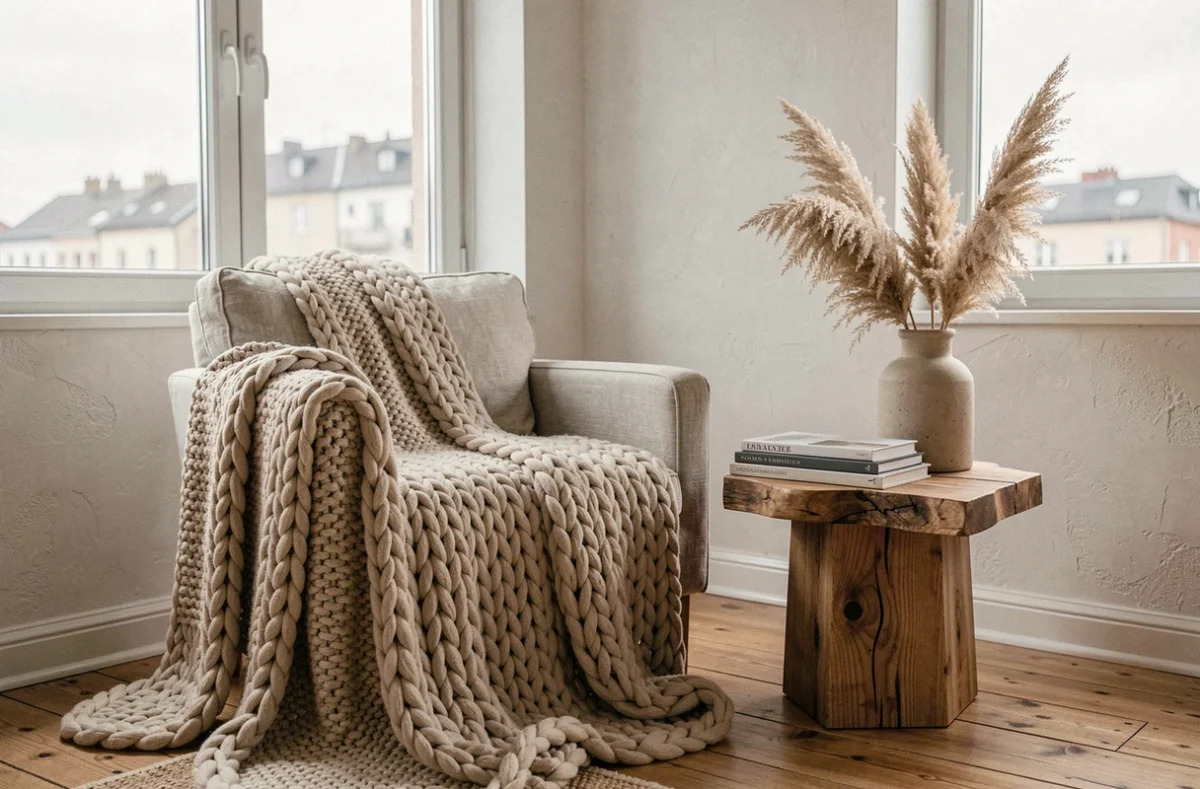
A throw blanket on a sofa is not enough to make a home feel warm. True comfort relies on choices that affect light, materials, air circulation, and even the thermal performance of the home. Transforming your house into a trendy cocoon means balancing decoration and livability, not just piling up cushions.
Thermal comfort and air quality: the invisible foundation of a cocooning interior
Have you ever noticed that a beautifully decorated room can still feel unpleasant if the air is stuffy or the walls are cold to the touch? The envelope of the home shapes the entire atmosphere. Poor insulation, single glazing, or energy-hungry heating systems neutralize decorative efforts.
Recent energy renovations place ventilation among the key areas to address alongside insulation and heating. The goal: to limit humidity, maintain healthy air, and prevent condensation on surfaces. An interior that accumulates textiles and thick rugs without proper air renewal encourages dust mites and mold.
Multiplying cozy materials in a poorly ventilated room produces the opposite effect of what is desired. Before investing in decor, check the condition of your air inlets and extraction points. On The Living Web for the home, you will find concrete ideas to reconcile home improvement and decoration.
Summer comfort deserves the same attention. Exterior solar protections, window shading, and nighttime ventilation help keep an interior livable during heat waves. An inviting cocoon works in every season, not just when temperatures drop.
Light and ambiance: three levels of lighting for a cozy living room
Lighting is the quickest lever to change the atmosphere of a room. A single powerful ceiling light flattens the volumes and eliminates any sense of warmth. The idea is to distribute light from multiple sources at different heights.
- A reading lamp or a floor lamp placed near the sofa creates an intimate corner without illuminating the entire living room.
- A warm white LED string light stretched along a shelf or window frame provides a soft halo without visually overwhelming the space.
- A dimmable floor lamp allows you to adjust the intensity according to the time of day, from work to relaxation.
Layering three light sources is enough to transform an ordinary living room. There’s no need to buy ten light fixtures. The principle: a soft general light, a functional task light, and a decorative ambient light.
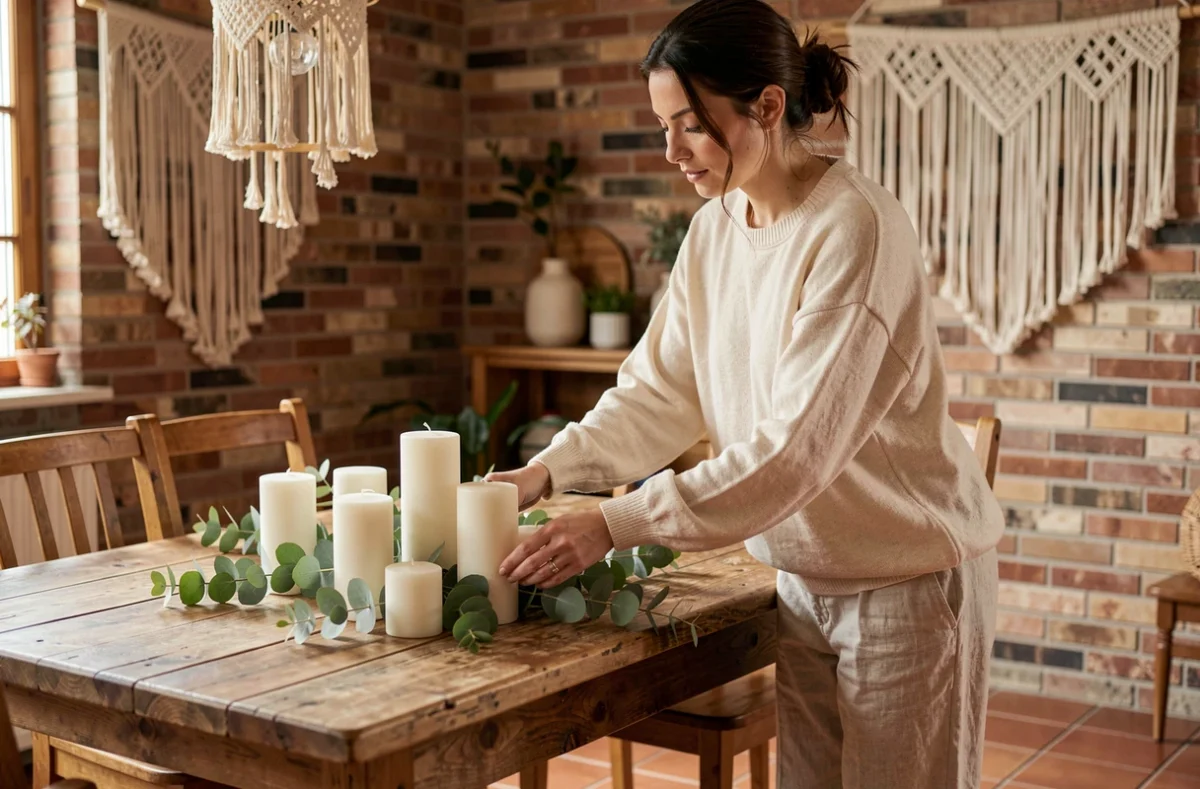
Candles remain a classic, but their frequent use in a poorly ventilated space degrades indoor air quality. Prefer them as occasional accents, not as primary lighting.
Natural materials and earthy colors: composing a coherent palette
Current decor trends converge towards light wood, raw linen, boucle wool, and earthy tones. Mocha beige, soft terracotta, greige: these colors work because they absorb light instead of reflecting it harshly.
How to choose wisely
Start with an existing element in the room. An oak floor, a stone wall, a gray sofa. The palette is built around what is already there, not from a disconnected Pinterest photo.
Then add one or two complementary materials. For example, a thick wool throw on a linen sofa, or corduroy cushions on a wooden bench. The contrast of textures creates the cocoon feeling, not the multiplication of patterns.
Avoid overly uniform combinations. An entirely beige living room looks bland. A touch of sage green, a mustard cushion, or a dark terracotta vase is enough to add depth without breaking harmony.
The trap of the total natural look
Betting everything on rattan, jute, and raw wood can produce a monotonous result. Introducing an unexpected material (matte black metal, glazed ceramic) anchors the decor and avoids a catalog effect. A metal light fixture above a solid wood table creates a clear focal point.
Bedroom and reading nook: creating micro-spaces for retreat
The cocoon is not limited to the living room. The bedroom and underutilized corners offer often-overlooked potential.
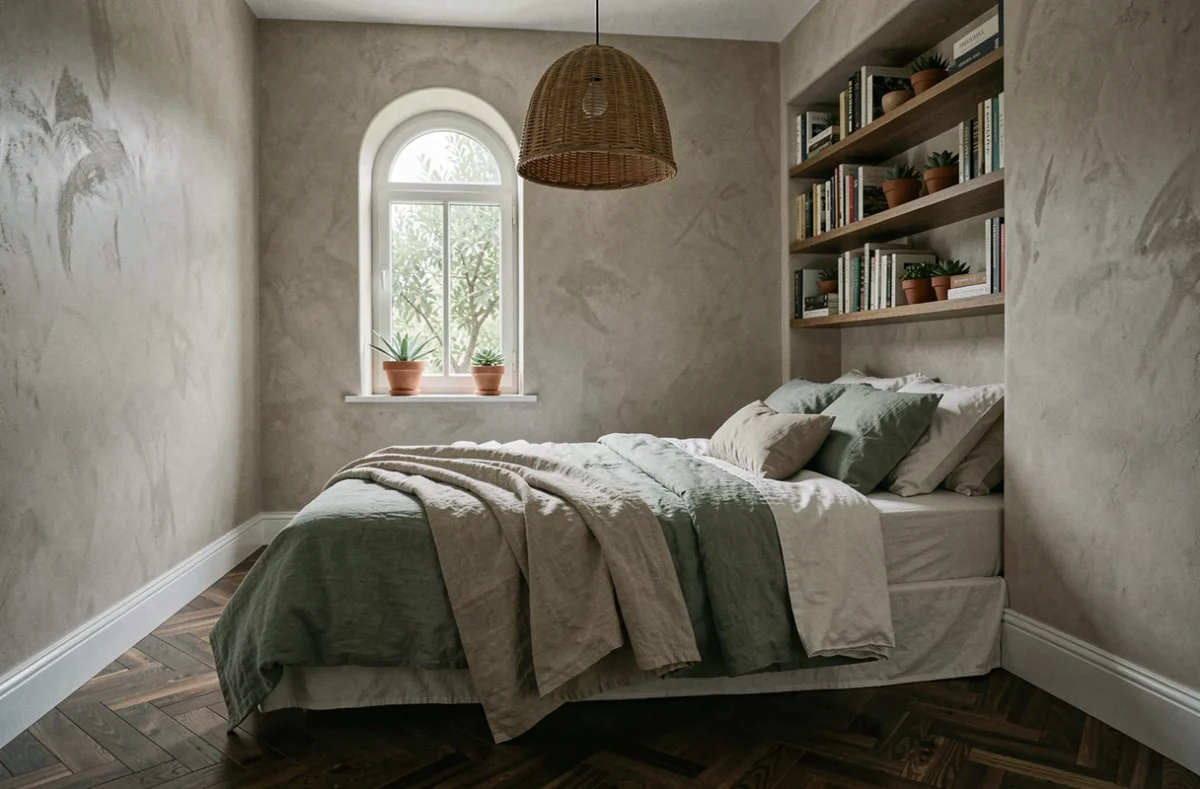
In the bedroom, bedding plays a central role. A washed linen sheet, a duvet with a thick cover, and two pillows of different sizes are enough. Accumulations of decorative cushions that are removed each evening are a false friend: they complicate daily use without enhancing real comfort.
Do you have an unused corner in a hallway or under a staircase? A compact armchair, a task lamp, and a small shelf can transform that space into a reading nook. A well-thought-out square meter is better than an overloaded living room.
- Choose an armchair with a seat deep enough for long sitting, not a purely decorative model.
- Place the light source behind your shoulder, slightly elevated, for effective reading light.
- Add a small rug under the chair to visually define the area and dampen sound.
These micro-spaces work because they create a break from the rest of the house. You retreat there, changing your pace. This is precisely what distinguishes a welcoming interior from a simply tidy space.
The most successful cocooning decor is the one that adapts to your home as it is, with its thermal constraints, volumes, and daily uses. Good lighting, carefully chosen materials, and a few targeted arrangements produce a more lasting result than a complete makeover based on a fleeting trend.