Synthetic voices are replacing voice-over commissions, illustrations generated in seconds are displacing weeks of graphic design work, and entire tracks are emerging from models trained on existing catalogs. Today’s art scene is about more than new styles or trendy festivals. It is undergoing a transformation in which the central question is no longer just what is being created, but under what conditions.
AI-generated music: who is losing commissions and income
Have you ever heard a background track in an ad or podcast without being able to identify the artist? This type of so-called “library music” is a market that artificial intelligence is rapidly absorbing. Representatives of the cultural industries warn that original music, voice-over and illustration commissions are being replaced by synthetic content.
The issue goes beyond style. It concerns the tangible loss of professional opportunities for artists. A composer who made a living from commissions for jingles, trailers or sound branding is seeing that income captured by tools capable of producing a comparable result in just a few minutes. The human work that fed these models—the catalogs they were trained on—generates no compensation in return.
This transfer of value also affects performers. Cloned voices are used for dubbing, while generated visuals replace covers commissioned from graphic designers. Cultural organizations documenting these developments, such as eklectik.info, make it possible to follow these changes as they unfold across the arts and music news.
Darcos bill: legal protection without a guarantee of payment
In France, the Darcos bill aims to make it easier to prove that copyrighted works have been used by AI systems. Under certain conditions, the bill provides for a presumption of use. In practice, this means artists would no longer have to prove on their own that their work was used to train a model.
This bill does not guarantee automatic compensation for artists. It rebalances access to evidence and negotiations between rights holders and AI providers, without setting a rate or payment mechanism. The distinction matters: having the use of a work recognized does not mean earning income from it.
Two sides, two priorities
The debate clearly pits two different visions against each other. On one side, cultural organizations are calling for more balanced negotiations and the possibility of licensing agreements between creators and AI platforms. On the other, tech companies fear legal uncertainty and a competitive disadvantage compared with countries with less stringent protections.
- For creators: the priority is to have a say in how their work is used and, ultimately, to receive a share of the revenue generated by synthetic content.
- For AI companies: concerns center on transparency requirements seen as overly burdensome and the risk of stifling innovation compared with other markets.
- For lawmakers: the lack of an established framework prolongs a legal vacuum in which neither artists nor companies have clear rules to follow.
This means that the terms governing the use of AI in creative work remain contested, and no technological trend takes hold without political friction.
The art scene in France: what is changing beyond AI
Reducing current trends to the question of artificial intelligence alone would give an incomplete picture. The French art scene is also changing in response to new formats, venues and audiences.
Festivals and immersive experiences
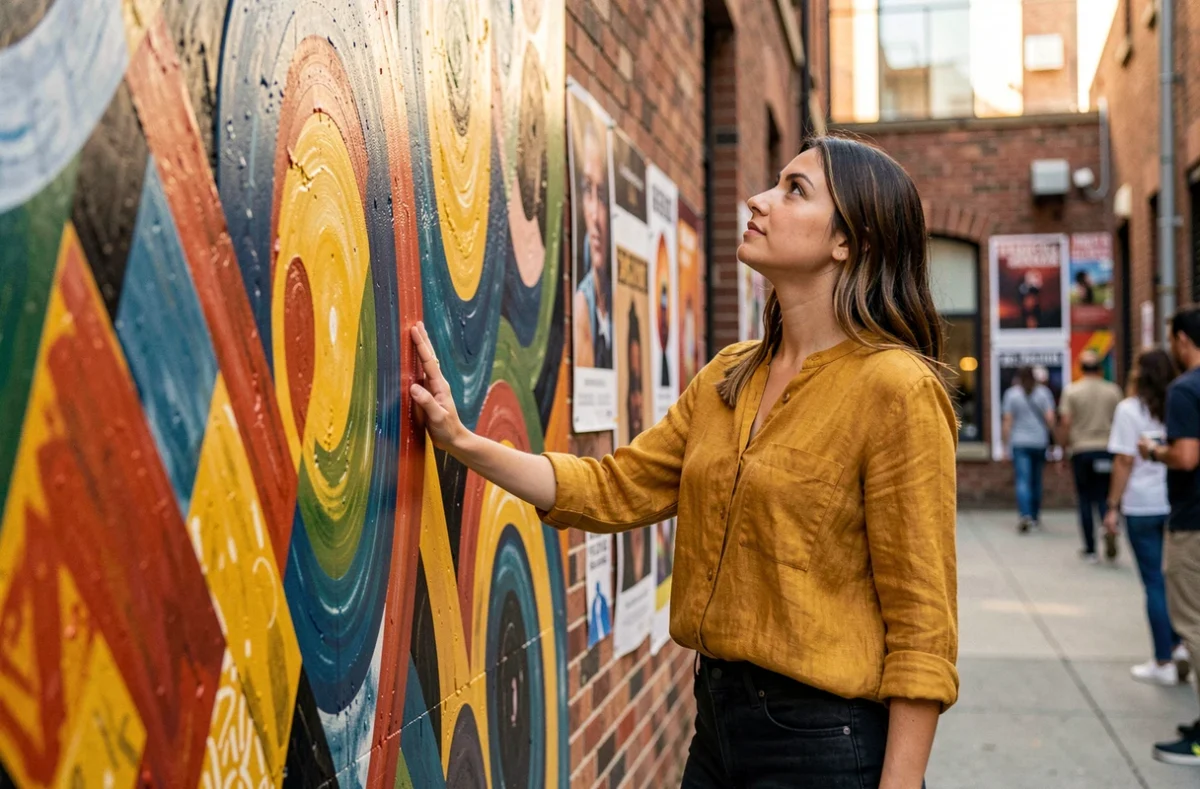
Music and contemporary art festivals are increasingly incorporating video, interactive installations and augmented reality. The experience offered to audiences is no longer limited to a concert or a static exhibition. Artists are designing experiences in which visitors take part, touch things and change what they see.
This shift is also changing the economics of cultural events. A festival that invests in immersive experiences attracts a wider audience, but its production costs rise. The variety of formats—online performances, hybrid exhibitions and intimate concerts in unusual venues—reflects an ongoing search for renewal.

Emerging artists and online visibility
Today, people discover music through streaming platforms and social media just as much as through radio or specialist publications. An artist can reach audiences in Paris, Bordeaux or Lyon without going through a traditional record label.
But this accessibility has a downside. The sheer volume of available content makes it harder to gain visibility. Getting played no longer means being listened to over time. Recommendation algorithms favor short tracks designed to grab attention in the first few seconds, steering creative work toward specific formats.
Culture and cultural policy: a reflection of current tensions
Artistic trends do not emerge in a vacuum. They reflect political choices, budgetary trade-offs and power dynamics between private and public players.
- Support for artists comes through funding programs whose criteria are evolving to include diversity, accessibility and the environmental transition of events.
- Cultural policy in France must contend with the growing influence of digital players that are not subject to the same obligations as traditional broadcasters.
- Questions of diversity and inclusion in the programming of festivals and cultural institutions are no longer an afterthought: they shape editorial choices and artistic direction.
Today’s art scene is defined as much by what it produces as by the conditions under which it does so. Tools are changing, formats are multiplying and audiences are fragmenting. What remains constant is the tension between creative freedom and a viable economic framework. Artists whose work feeds AI models are still waiting for a framework that turns legal recognition into real income.